Lockheed Martin appoints new chief executive for Australia and New Zealand
Jeremy King previously served the Australian Defence Force for more than 30 years and has led major capability programs such as the MRH-90 and Chinook project.
One Lockheed executive argued the company has scores of workers available for the job after a different sub program was scrapped in favor of the American boats.
“It’s a critical time right now that Australian industry has actually got a hand up to say, 'Hey, we’re here to help,'" a Lockheed executive said.
"The next priority for production is Europe," Lockheed's Tim Cahill told reporters. "I would say the Middle East is the next area of direct priority and interest, both on the part of the countries and the part for us to produce."
"I am sure some companies will seriously consider the business case for dealing with defense as a customer in the future, which I worry will mean our warfighters will miss out on homegrown innovations that can make a difference on the battlefield,” Jeremy Hallett, head of the Space Industry Association of Australia, said in a statement.
"Having a manufacturing complex in Australia will enable production of solid rocket motors for ourselves, firstly and then ultimately, from an export perspective, to our allies and partners around the world. And there is, at the moment, an inability to meet that demand," David Goodrich, Anduril Australia CEO, told Breaking Defense.
"You know, gone are the days where we wait for years, and then something gets delivered. What we've got now is every nine months there's going to be a release internally," Air Commodore Benjamin Sleeman, director-general for integrated air and missile defense, said.
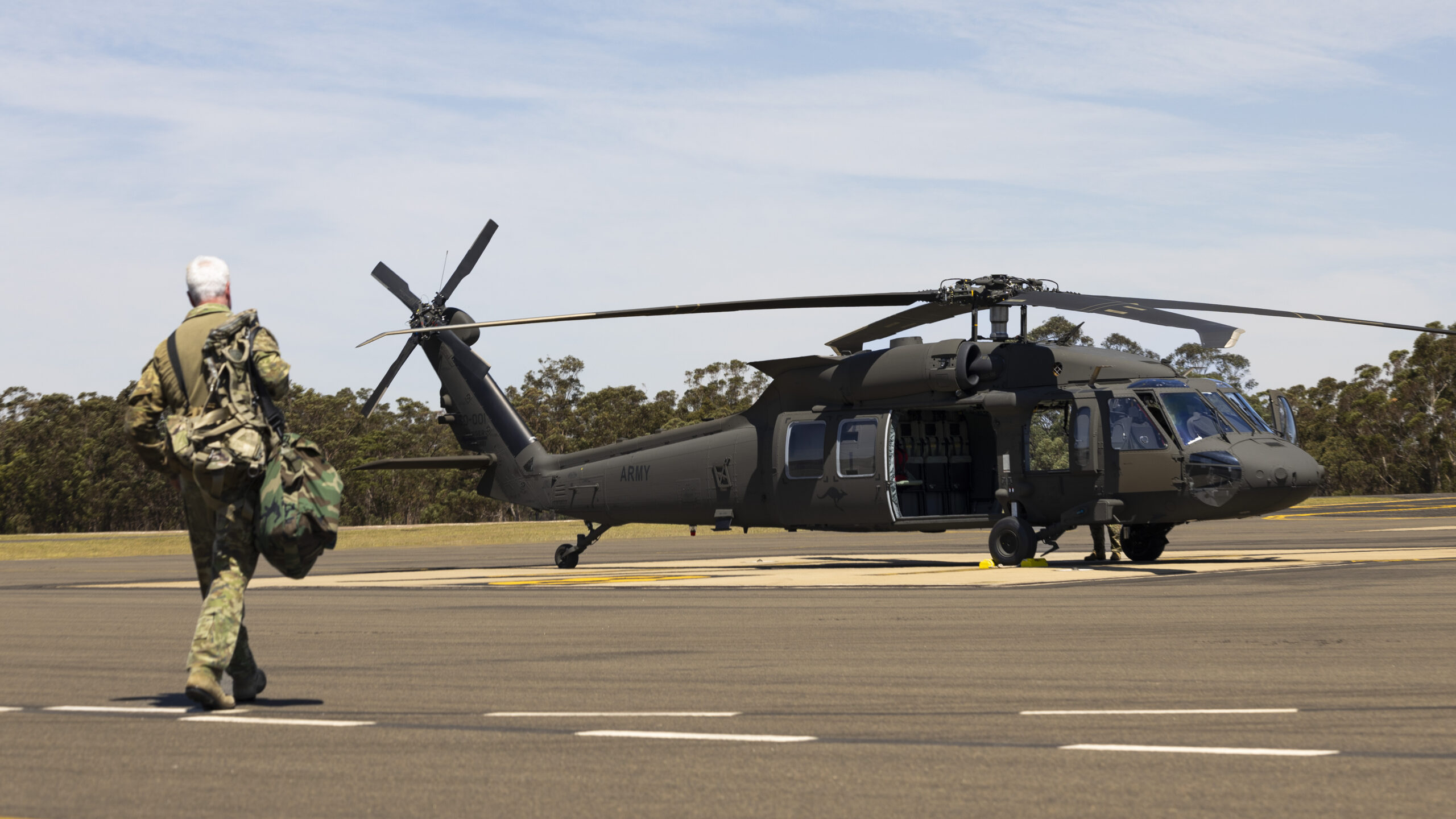
"When the tough but necessary decision was made last year to expedite the withdrawal of the MRH-90s [Taipans] from service, it meant that we needed to look at all options when it came to filling the capability gap and the training which our servicemen and women need,” Defense Minister Richard Marles said in a statement.
"I read about so many people in my position, who say, I'm going to triple revenue by whatever. I don't get into that game. Perhaps that's because of my defense upbringing. I know how to turn capital into capability. I look at value in a company. Revenue to me is one marker. Value is the most important marker for me," Warren "Macca" McDonald, CEO of Lockheed Martin Australia, told Breaking Defense.
“This critical capability will allow the ADF to leverage information from across all domains at greater speeds, with better accuracy and at a greater scale than it is capable of today,” Stephanie Hill, executive vice president of Lockheed Martin Rotary and Mission Systems, said in a statement.
The Defense Department here, in an unusual move, announced that Lockheed had been directly awarded the contract for what is expected to be a $4 billion AUD ($2.86 billon) commitment to Australia’s first sovereign military satellite program.
Lockheed Australia's CEO, Warren McDonald sees Air 6500 as part of what he called a "massive recapitalization" of Australia's military.
Lockheed Martin Australia announced a $74 million AUD facility that will be modeled to some degree on its Lighthouse facility in Virginia, where it runs modeling and simulations, as well as wargames.
"Lockheed Martin will deliver and transfer to Australia the same level of technology and development and advanced programs and systems that we have in our factories in United States," Pat Sunderlin, VP of operations for Lockheed Martin Missiles and Fire Control, said.